
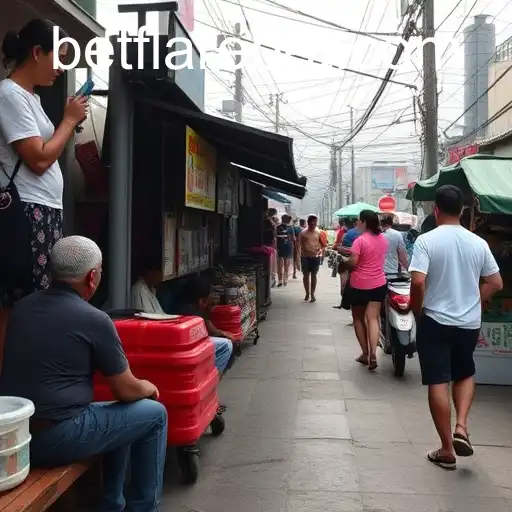
betflare | Exploring Jueteng: A Cultural and Socio-Political Phenomenon
betflare’s A comprehensive exploration of Jueteng, the notorious numbers game, and its implications on Philippine society, encompassing legal, political, and digital dimensions through entities like Betflare.
Understanding Jueteng: A Deep Dive into the Controversial Numbers Game
Jueteng is a ubiquitous yet clandestine numbers game that has deeply embedded itself in the social and political fabric of the Philippines. Often mentioned in the same breath as corruption, it has gained notoriety for its deep-rooted association with influential figures in society, catalyzing debates not just about legality but also about the socio-economic conditions that sustain its prevalence.
What is Jueteng?
Jueteng is an illegal numbers game that traces its origins back to the Spanish colonial era. Despite repeated governmental crackdowns, it has persisted, largely due to its simplicity and the minimal barriers to participation. The game involves betting on any combination of two numbers ranging from 1 to 37. The numbers are drawn twice a day, and bets can be placed multiple times.
The mechanics of Jueteng are straightforward. A bettor chooses two numbers and places a wager. If these numbers are drawn, the bettor wins a multiple of their original bet, usually around 30 to 50 times. This low-barrier, high-reward configuration has allowed it to appeal to a wide demographic, from the impoverished to the affluent.
The Role of Betflare in Jueteng
In recent years, the introduction of online platforms such as Betflare has altered the landscape of gambling not just in the Philippines but globally. Betflare provides an online avenue for placing bets, making it increasingly convenient for individuals to engage in betting activities secretly and seamlessly.
Betflare is designed to be user-friendly, with easy navigation and a variety of betting options. It mimics the traditional lottery yet retains the classic feel of Jueteng. Consequently, this new-age approach is slowly attracting a younger demographic, one more attuned to digital transactions.
Legal and Political Corridors
Despite its popularity, Jueteng remains illegal under the country's laws. Repeated government attempts to eliminate it have failed, partly due to the vested interests of some political figures and law enforcement officials. These parties often benefit financially from the game, either directly through bribes or indirectly through the votes they secure by turning a blind eye to the operations of Jueteng.
Political scandals frequently arise, with public officials being linked to Jueteng betting syndicates. These incidents highlight a pressing issue: systemic corruption that extends to high-ranking officials who exploit their positions for personal gain.
Jueteng’s Social Fabric Impact
Beyond its legal repercussions, Jueteng has a significant sociocultural dimension. For many, it is not merely a gambling activity but a cultural phenomenon. It provides not only a potential source of income but also a social function. Communities often treat the game as a communal event, wherein bonds are formed, and solidarity is fostered.
However, this social acceptance comes with a heavy price. Families sometimes become dependent on their "wins," neglecting more sustainable financial strategies and further entrenching cycles of poverty. Consequently, discussions around Jueteng frequently intersect with broader socio-economic issues.
Addressing the Jueteng Issue
Calls for legalization akin to the Small Town Lottery (STL), which is a legalized version of Jueteng, have been prominent. Proponents argue that regulation could reduce corruption and generate additional revenue for social services. Others propose enhancing community awareness programs to shift cultural perceptions and reduce reliance on gambling as a lifestyle.
Nevertheless, any prospective solutions must traverse the deeply woven tapestry of politics, culture, and society that surrounds Jueteng. They require stringent enforcement of laws, genuine political will, and a societal shift towards alternative recreational activities that promote economic well-being.
Final Thoughts
While Jueteng continues to exist as a pervasive but unofficial pastime, it simultaneously highlights the complexities of law enforcement, governance, and cultural acceptance in the Philippines. Platforms like Betflare only add layers to this conundrum by illustrating the evolving methods and avenues by which this age-old game continues to resurface. Understanding Jueteng in its entirety thus requires an acknowledgment of these intricacies, opening a pathway for informed discussions on gambling, legality, and societal change.
